Corporate Yoga in Houston: A Compassionate Guide for HR Teams (Programs Employees Actually Join)
If you’re an HR leader searching for corporate yoga in Houston, you’re probably not trying to “add another perk.” You’re trying to support real humans—people who are tired, stressed, stretched thin, and doing their best. A workplace yoga program can be one of the most effective wellness offerings when it’s built with care, because it meets employees exactly where they are: at work, in their bodies, and often in survival mode.
This guide is written for HR teams who want a program employees actually join—and a format that feels inclusive, respectful, and sustainable.
What corporate yoga is (and what it isn’t)
Corporate yoga is not a fitness class disguised as wellness. A well-designed corporate yoga program is a nervous system reset: gentle mobility, stress reduction, breathwork, and recovery. It’s for people who sit all day, carry tension in their neck and jaw, feel mentally overloaded, and may not feel comfortable in a traditional yoga studio.
It is also not about performance. Employees don’t need to “be good at yoga.” The best workplace programs are beginner-friendly, trauma-informed, and optional—so participation is based on comfort, not pressure.
Why employees actually participate
Participation is the honest metric. If employees aren’t showing up, it isn’t because they “don’t care about wellness.” It’s usually because the program doesn’t feel accessible.
Here’s what consistently increases attendance:
1) Make it easy (zero friction)
Employees are more likely to join when the session works in work clothes, in a conference room, or even from a chair. If participation requires mats, changing outfits, or getting sweaty, attendance drops quickly.
2) Make it emotionally safe
For many people, work already feels evaluative. Yoga should not add more performance pressure. Offer permission to modify, step out, or simply breathe.
3) Keep it short and consistent
A 20–30 minute weekly program often outperforms a one-time “wellness day.” Consistency creates trust, and trust creates participation.
Formats HR teams can choose from
Different companies need different structures. The best format is the one that respects the reality of your team.
Chair yoga (high participation)
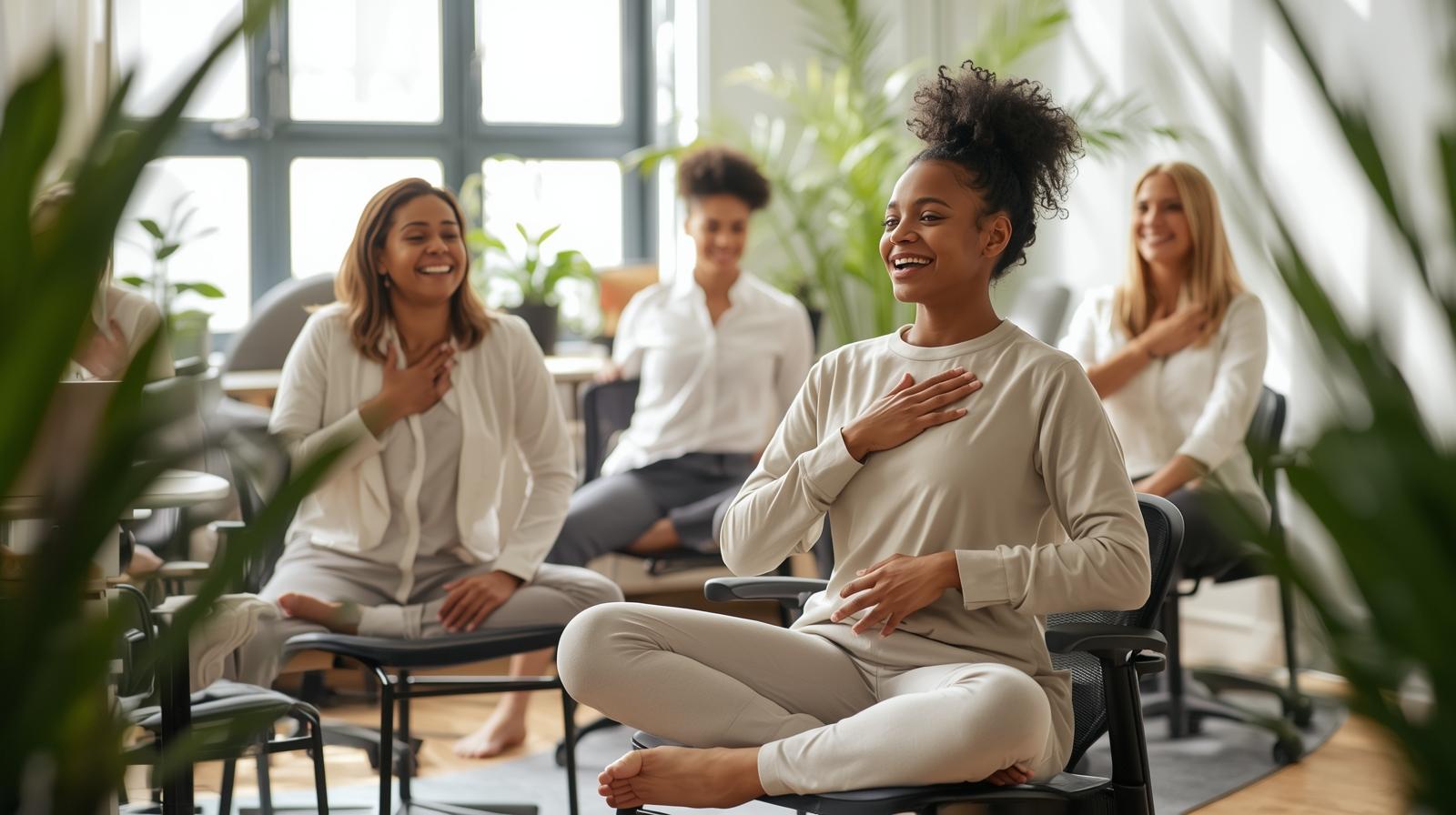
Chair-based sessions are the most accessible option for workplaces. They’re ideal for desk workers, frontline teams, and any group that needs a “reset” without changing clothes.
Mat-based gentle yoga (great for spacious offices)
If you have space and employees who want a deeper practice, a gentle mat-based class can be beautiful—but keep it inclusive and low-intensity.
Breathwork + mobility (fast, practical, powerful)
A 15–20 minute session focused on breath and tension release is often a favorite for high-demand teams. It feels like “maintenance,” not an activity.
Virtual yoga for hybrid teams
Virtual sessions can be surprisingly effective when cameras are optional and the class is designed for small spaces. Many remote employees feel safer joining from home.
What to ask before hiring a corporate yoga instructor
When you’re evaluating a provider, these questions matter more than the instructor’s “advanced poses.”
“How do you make classes inclusive for beginners?”
Look for language around accessibility, choice, and chair modifications.
“How do you support employees who carry stress or anxiety?”
A provider who understands nervous system regulation will prioritize breath, pacing, and grounding.
“What does a typical session look like?”
A balanced workplace session often includes:
• arrival and breath (2–3 minutes)
• gentle mobility for shoulders/hips/wrists (8–12 minutes)
• focused stretching + posture support (8–10 minutes)
• short guided relaxation (2–5 minutes)
“How do you increase participation over time?”
A thoughtful provider will talk about communication, consistency, and making employees feel safe to try.
How to build a program that lasts
Many HR teams start with a pilot. That’s a smart approach—just design it intentionally.
Step 1: Start with a 6–8 week pilot
This gives employees time to build familiarity. Wellness is not immediate; trust takes repetition.
Step 2: Measure the right things
Instead of chasing productivity metrics, ask employees:
• do you feel less tension after sessions?
• do you feel calmer in the afternoon?
• would you like this to continue?
Step 3: Normalize breaks at the culture level
Programs succeed when leaders model participation and when breaks are not treated as “time off,” but as recovery that supports sustainable work.
Common mistakes (and easy fixes)
Mistake: scheduling at the worst time of day Fix: poll employees; choose mid-morning, lunch, or late afternoon based on workflow.
Mistake: making it feel mandatory Fix: keep it opt-in, gently inviting. Autonomy increases participation.
Mistake: expecting one event to “solve burnout” Fix: commit to consistency. Small weekly resets change the temperature of the workplace over time.
If you’re searching for corporate yoga in Houston
If your goal is to genuinely support employees — not push another initiative — workplace yoga can become a steady source of relief inside the workday. The most effective programs start small, stay accessible, and meet people exactly where they are.
If you’d like to see how it feels in your environment, you can begin with a pilot session. Bliss Yoga Collective offers gentle, inclusive workplace classes designed for real teams, real schedules, and all comfort levels.